Important Checks Before Taking A Gold Loan
A gold loan allows borrowers to raise funds by pledging eligible gold jewellery as collateral. Since the loan is secured against gold, the approval process may differ from unsecured borrowing, but borrowers still need to review interest rates, valuation methods, repayment terms and applicable charges carefully.
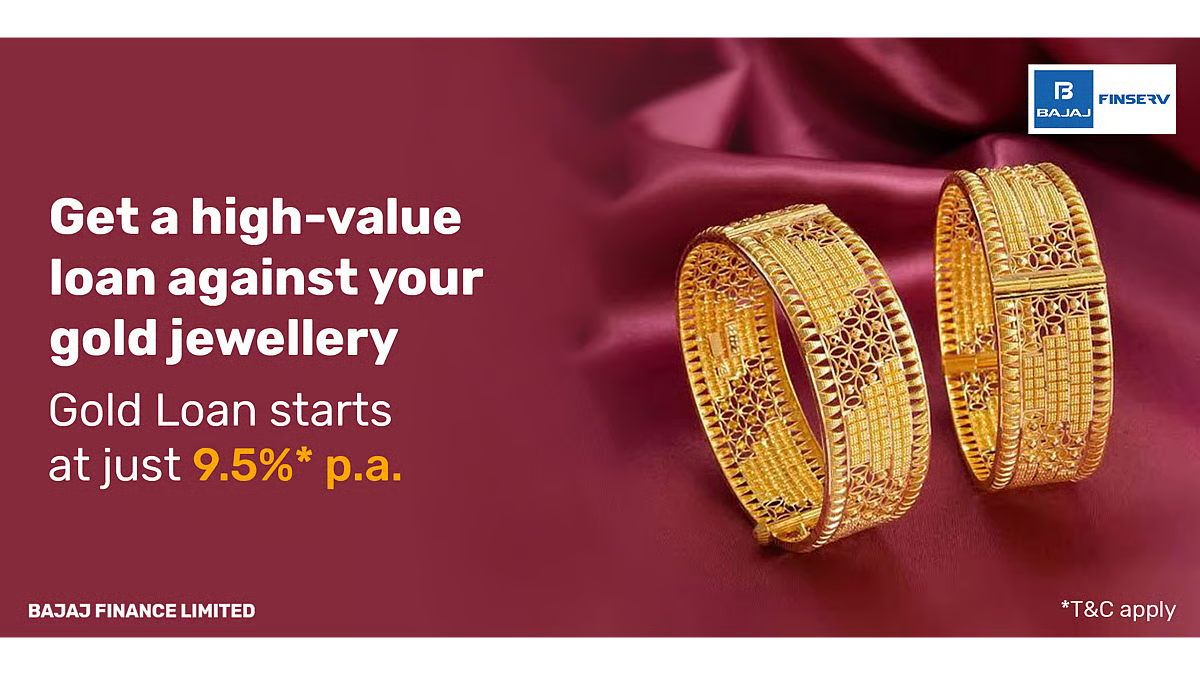
Someone comparing a best personal loan with a secured borrowing option should understand that the two products work differently. A personal loan generally does not require collateral, while a gold-backed loan depends on the value and eligibility of the pledged jewellery.
A Gold Loan can provide access to funds for short-term or planned financial needs, but the pledged asset may be at risk if repayment obligations are not met. Borrowers should therefore choose the loan amount and repayment structure carefully.
Understand The Basic Loan Structure
In a gold-backed loan, the borrower pledges eligible jewellery to the lender.
The lender evaluates the gold and determines the amount that may be offered based on factors such as purity, weight and applicable loan-to-value requirements.
The jewellery remains with the lender during the loan period according to the applicable terms.
Loan Amount Depends On Eligible Gold Value
The market value of the jewellery does not necessarily equal the amount that can be borrowed.
The lender may consider:
- Gold purity
- Net gold weight
- Prevailing valuation method
- Applicable loan-to-value ratio
- Internal eligibility policies
Stones, decorative materials or other components may not receive the same valuation as the gold content itself.
Review The Gold Valuation Process
Gold valuation is an important part of the borrowing process because it influences the eligible loan amount.
Borrowers should understand how the lender determines the value of the pledged jewellery.
Purity Can Affect Eligibility
Jewellery with higher eligible gold purity may receive a different valuation from lower-purity items.
The lender may test the jewellery during the application process.
Borrowers should ask for clarity on:
- Purity assessment
- Net eligible weight
- Per-gram valuation
- Final eligible amount
Understanding these factors can reduce confusion about the sanctioned loan.
Understand The Loan-To-Value Ratio
The loan-to-value ratio, or LTV, represents the proportion of the eligible gold value that may be offered as a loan.
Applicable limits can depend on prevailing regulations and lender policies.
A Higher LTV Means More Borrowing Against The Same Gold
For example, if two products use different eligible LTV structures, the loan amount available against the same jewellery may differ.
Borrowers should not automatically choose the highest available amount.
Taking only what is required can reduce interest costs and repayment pressure.
Compare Interest Rates
The interest rate influences the cost of borrowing.
Rates may differ depending on the lender, loan amount, tenure and repayment structure.
Compare The Effective Cost
Borrowers should consider more than the headline rate.
The total cost may also include:
- Processing fees
- Valuation charges
- Documentation fees
- Penal charges
- Applicable taxes
- Other service charges
Two loans with similar interest rates may have different total costs once fees are included.
Choose A Suitable Repayment Method
Gold-backed loans may offer different repayment structures depending on the product.
Possible arrangements can include:
- Regular EMIs
- Periodic interest payments
- Interest payment with principal due later
- Other lender-specific structures
- Match Repayment With Cash Flow
A salaried borrower may prefer predictable monthly payments.
Someone with irregular income may need to compare other permitted repayment structures carefully.
The chosen method should fit the borrower’s expected cash flow rather than simply appearing convenient initially.
Review The Loan Tenure
Gold-backed loans are often used for relatively shorter borrowing periods, though available tenures can vary.
A longer tenure may reduce immediate repayment pressure but can increase the total interest paid.
Avoid Borrowing For Longer Than Needed
If the financial requirement is temporary, borrowers should estimate when they expect to repay the loan.
A clear repayment plan can help reduce unnecessary interest accumulation.
Before choosing the tenure, consider:
- Expected income
- Existing EMIs
- Upcoming expenses
- Emergency reserves
- Understand The Risk To Pledged Gold
Because jewellery is pledged as collateral, repayment failure can have serious consequences.
If the borrower does not meet the agreed obligations, the lender may follow applicable procedures relating to the pledged asset.
Read Default Terms Carefully
Borrowers should understand:
- Missed-payment consequences
- Penal charges
- Notice procedures
- Loan renewal rules
- Auction-related conditions where applicable
These terms should be reviewed before signing the agreement rather than only after repayment difficulties arise.
Compare Processing Charges
Interest is not the only cost associated with borrowing.
Depending on the lender, additional fees may apply.
These can include:
- Processing charge
- Valuation fee
- Documentation cost
- Renewal charge
- Late-payment charge
- Request A Complete Fee Schedule
Borrowers should ask for the full list of charges and understand when each one applies.
A loan with a slightly lower interest rate may not always be cheaper if other fees are significantly higher.
Check Prepayment Conditions
Borrowers who receive funds earlier than expected may want to repay the loan before maturity.
Prepayment can potentially reduce future interest costs, depending on the loan structure.
Understand Foreclosure Terms
Before accepting the loan, check whether:
- Prepayment is allowed
- Partial repayment is permitted
- Foreclosure charges apply
- Minimum repayment conditions exist
Flexibility can be useful for borrowers whose income may improve during the loan period.
Borrow Only The Amount Required
The availability of collateral may make it possible to borrow more than the immediate requirement.
However, a larger loan also creates higher repayment obligations.
Keep The Purpose Clear
Before borrowing, identify the exact requirement.
Common uses may include:
- Medical costs
- Education expenses
- Business working capital
- Emergency household needs
- Short-term cash-flow gaps
Borrowing substantially more than necessary can increase interest costs without providing additional financial benefit.
Compare Secured And Unsecured Borrowing
A Gold Loan is secured against pledged jewellery, while many personal loans are unsecured.
This difference can affect eligibility, pricing and the application process.
Each Product Has Different Trade-Offs
A secured loan involves collateral risk.
An unsecured loan may rely more heavily on income, credit profile and existing debt obligations.
Borrowers should compare:
- Interest rate
- Fees
- Required collateral
- Repayment flexibility
- Approval conditions
- Total borrowing cost
The right choice depends on individual circumstances.
Keep An Emergency Buffer
Repayment should not use every available rupee of monthly income.
Borrowers should maintain some financial flexibility for unexpected expenses.
Avoid Creating A Second Borrowing Need
If all available funds are committed to repayment, an unexpected medical or household expense may force the borrower to take another loan.
Maintaining an emergency reserve can reduce this risk.
Review Credit Impact
Although the loan is backed by gold, repayment behaviour can still matter.
Missed or delayed payments may have consequences depending on the reporting and lending structure.
Repay On Time
Borrowers should track:
- Due dates
- Payment amount
- Outstanding balance
- Loan maturity date
Automatic reminders can help reduce missed payments.
Confirm Gold Storage And Release Procedures
Borrowers should understand how pledged jewellery is stored and how it will be returned after full repayment.
Keep Documentation Safely
Important records may include:
- Loan agreement
- Pledge receipt
- Jewellery details
- Payment receipts
- Closure confirmation
These documents can help when the loan is completed and the jewellery is released.
Use Digital Loan Access Carefully
An instant loan app may make it easier to review borrowing options or manage loan information, but speed of access should not replace a careful review of rates, fees, tenure and repayment obligations.
Borrowers should verify the final sanctioned terms in the official agreement before proceeding.
Conclusion
A Gold Loan can provide access to funds by using eligible jewellery as collateral, but the decision should be based on more than the amount offered.
Borrowers should review gold valuation, loan-to-value limits, interest rates, charges, repayment methods, tenure and default conditions before accepting a loan.
It is equally important to borrow only the amount required and maintain a realistic repayment plan.
Since the pledged jewellery is linked directly to the loan obligation, timely repayment and a clear understanding of the agreement are essential.